From Reactors to 5G: What NASA Needs for a Permanent Lunar Base
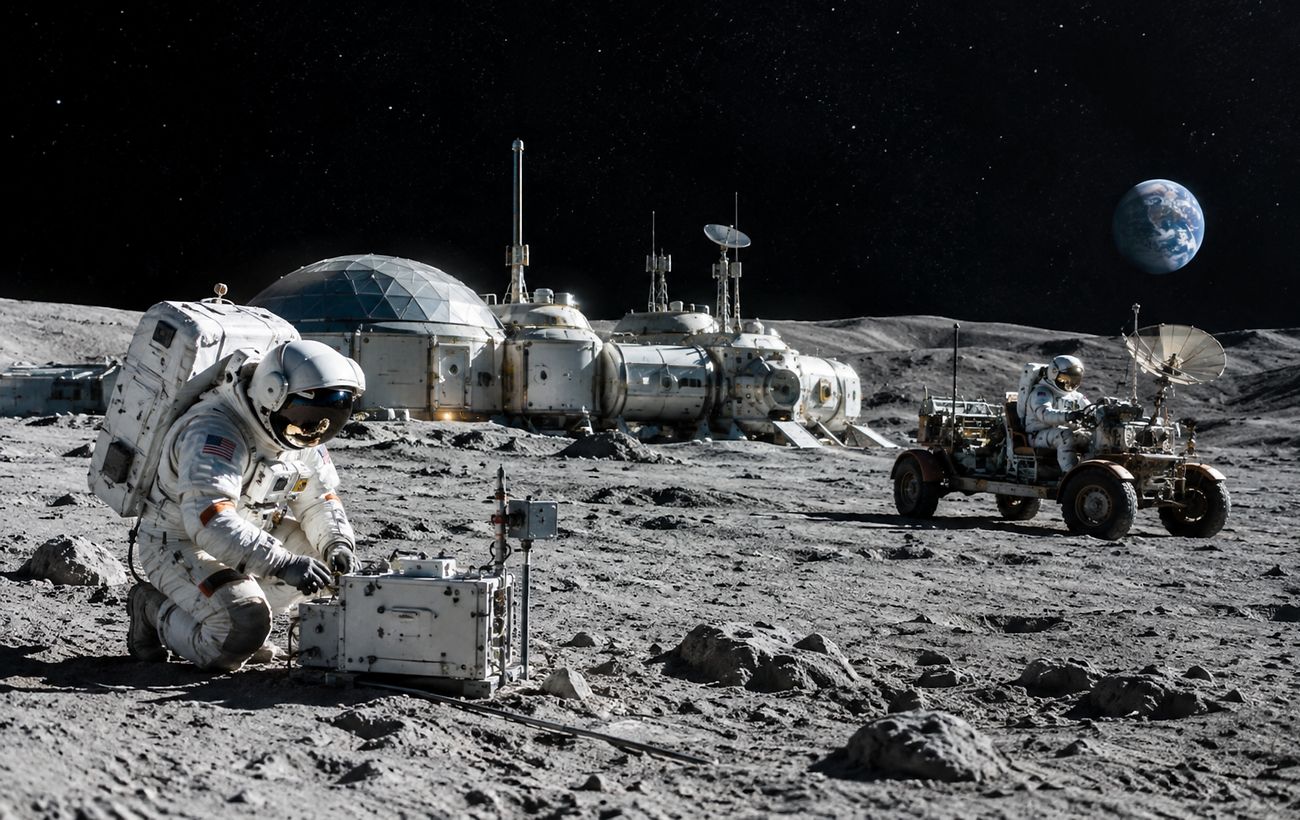
NASA and global scientists are developing seven critical technologies required to sustain a permanent human presence on the Moon.
 💡Tech
Photo: RBC-Ukraine
Key points
- NASA plans to deploy a lunar nuclear reactor by 2030
- ISRU strategy focuses on mining water and oxygen locally
- Engineers are tackling hazards from sharp lunar dust and cosmic radiation
Space exploration is shifting toward long-term habitation, posing unprecedented engineering challenges for space agencies. Establishing a permanent base on the Moon requires advanced solutions ranging from radiation shielding to reliable power generation and life support systems.
Nuclear Power and In-Situ Resources
Solar panels alone cannot sustain a lunar base due to the alternating two-week lunar day and night cycles. Therefore, NASA is advancing alternative power sources, including compact nuclear reactors, with the Lunar Reactor-1 scheduled for delivery to the lunar surface by 2030 following rigorous testing.
To reduce the prohibitive costs of resupplying from Earth, agencies are focusing on In-Situ Resource Utilization (ISRU) to extract water ice from shadowed polar craters and oxygen from regolith. Furthermore, engineers must overcome the abrasive nature of lunar dust and intense space radiation to ensure the long-term safety of equipment and crew habitats.
Source RBC-Ukraine — rbc.ua/ukr/news/vid-dernogo-reaktora-5g-shcho-potribno-nasa-1794836… ↗
Read next
 👥Society
Financial incentives cannot replace systemic changes in mobilization: experts
Experts emphasize that cash payments do not solve mobilization issues, as the main deterrent remains the uncertainty regarding the duration of military service.
 🏛️Politics
Construction of two missile boats for the Ukrainian Navy completed in Scotland
The UK and Norway have funded the construction of two missile boats for the Ukrainian fleet to enhance security in the Black Sea.
 🎭Culture & Sport
Where to go for Christmas 2026: Top European Markets
Lonely Planet has released a list of the 15 most attractive Christmas markets in Europe to visit at the end of 2026.
 🏛️Politics
Ukrainian border guards neutralize a new Russian 'Filin' missile
A mobile unit of the State Border Guard Service intercepted a new type of Russian cruise missile that utilizes 3D-printed components.
 ⚽Sport
Arsenal held to a draw by Newcastle, missing chance to extend lead
Arsenal drew 2-2 away at Newcastle in the 11th round of the Premier League, failing to capitalize on Manchester City's dropped points.
 🚌Transport
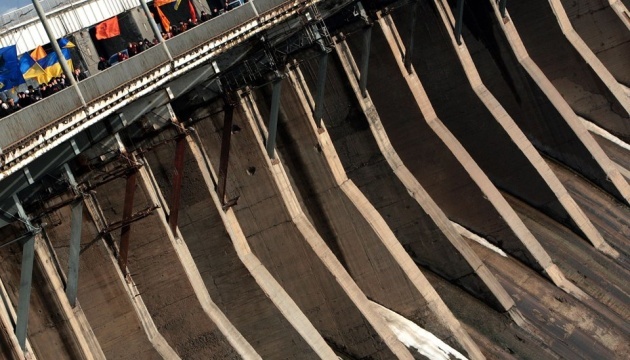
Traffic halted across DniproHES dam and bridges in Zaporizhzhia following enemy attack
Local authorities have suspended all traffic across key transport arteries in Zaporizhzhia after a guided aerial bomb attack.